Blog / Air Quality in a Steel Plant
 11 February 2026
integratedAIR Systems was approached by Marcegaglia UK, the largest steel
manufacturer in Great Britain, to address persistent air quality issues arising
from its tundish wrecking process. The client had been experiencing significant
dust and fume emissions during tundish rotation, particularly in a small waste
room below the operation. These emissions affected the working conditions for
operatives and contributed to wider contamination across the melt shop and
warehouse. The client requested a dedicated extraction system to contain and
control these emissions, improving the environment throughout the facility.
At the client’s steel production facility, the tundish
wrecking process was generating considerable operational and environmental
concerns. Following each casting cycle from the Combi Caster, the tundish’s
sacrificial lining needed to be removed, an operation that involved rotating
the tundish 180 degrees in the wrecking station, allowing the solidified skull
to fall out in preparation for relining. This mechanical action released a
substantial volume of refractory dust and fume into the atmosphere, much of
which lingered in the melt shop, degrading air quality and creating difficult
working conditions for plant operatives. .
The existing setup relied on a shared extraction system,
which prioritised another critical plant operation. As a result, the tundish
wrecking station was frequently left without adequate extraction. The client
identified the urgent need for a dedicated local extraction solution to improve
internal air conditions and meet environmental standards across the site.
With these concerns in mind, integratedAIR was tasked with
designing and implementing a self-sufficient, high-capacity extraction solution
to eliminate refractory dust and fumes at the source, thereby dramatically
improving operational conditions for workers and the surrounding environment.
To effectively contain refractory dust and fume emissions,
multiple custom-built overhead extraction hoods were installed across the
ceiling of the waste area directly above the tundish wrecking station, significantly
improving air quality for personnel working nearby and reducing the spread of
contamination into adjacent areas of the melt shop.
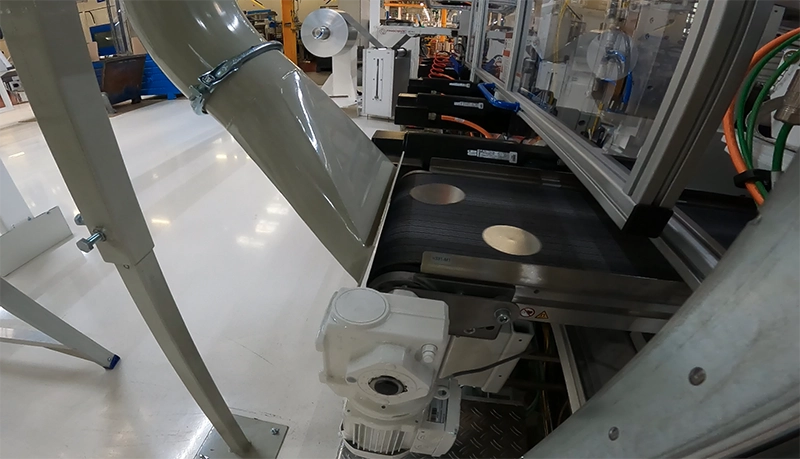
The dust-laden air is drawn through a ducting system,
ensuring continuous transfer from the source to the filtration, which enhances
extraction efficiency and lowers maintenance needs.
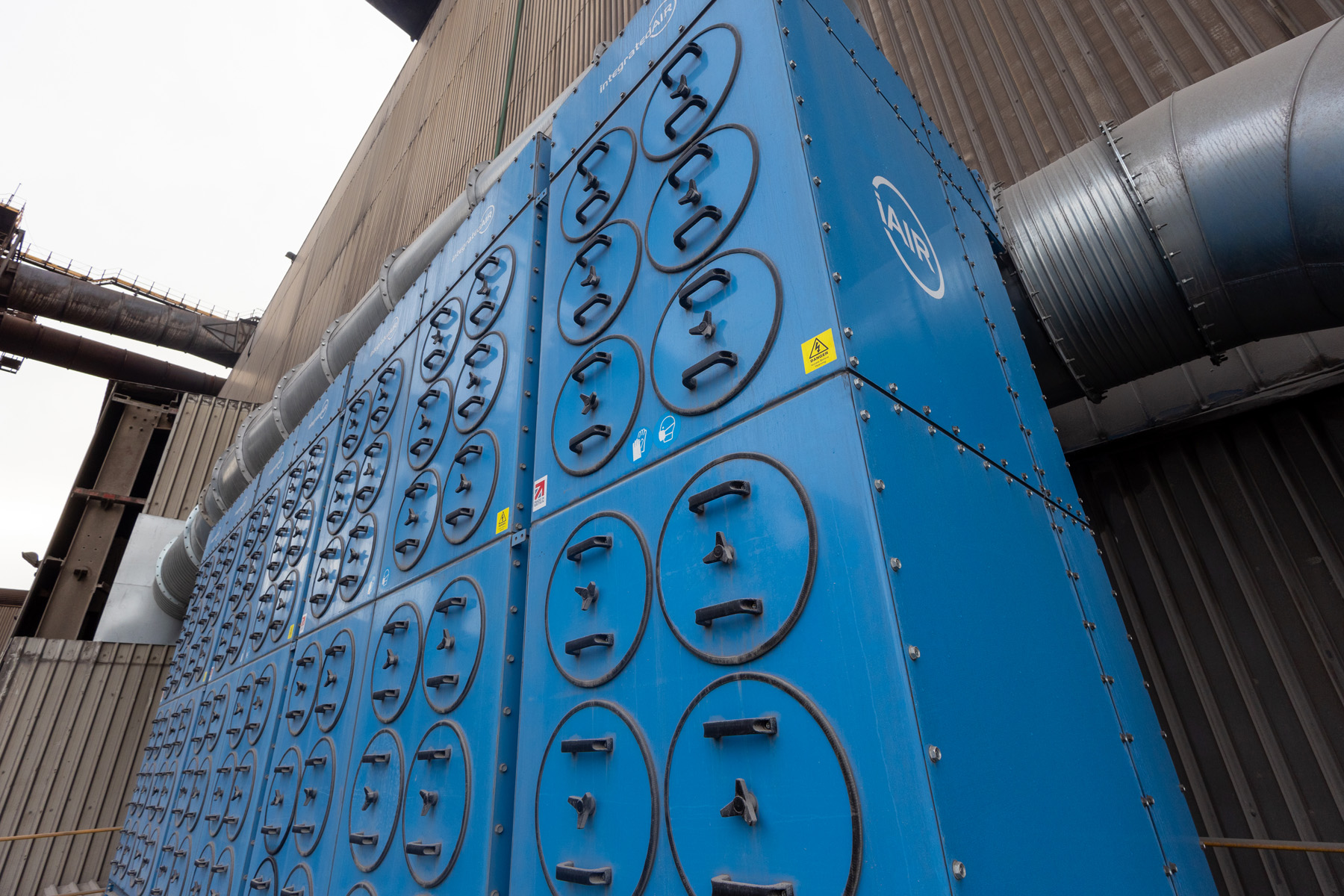
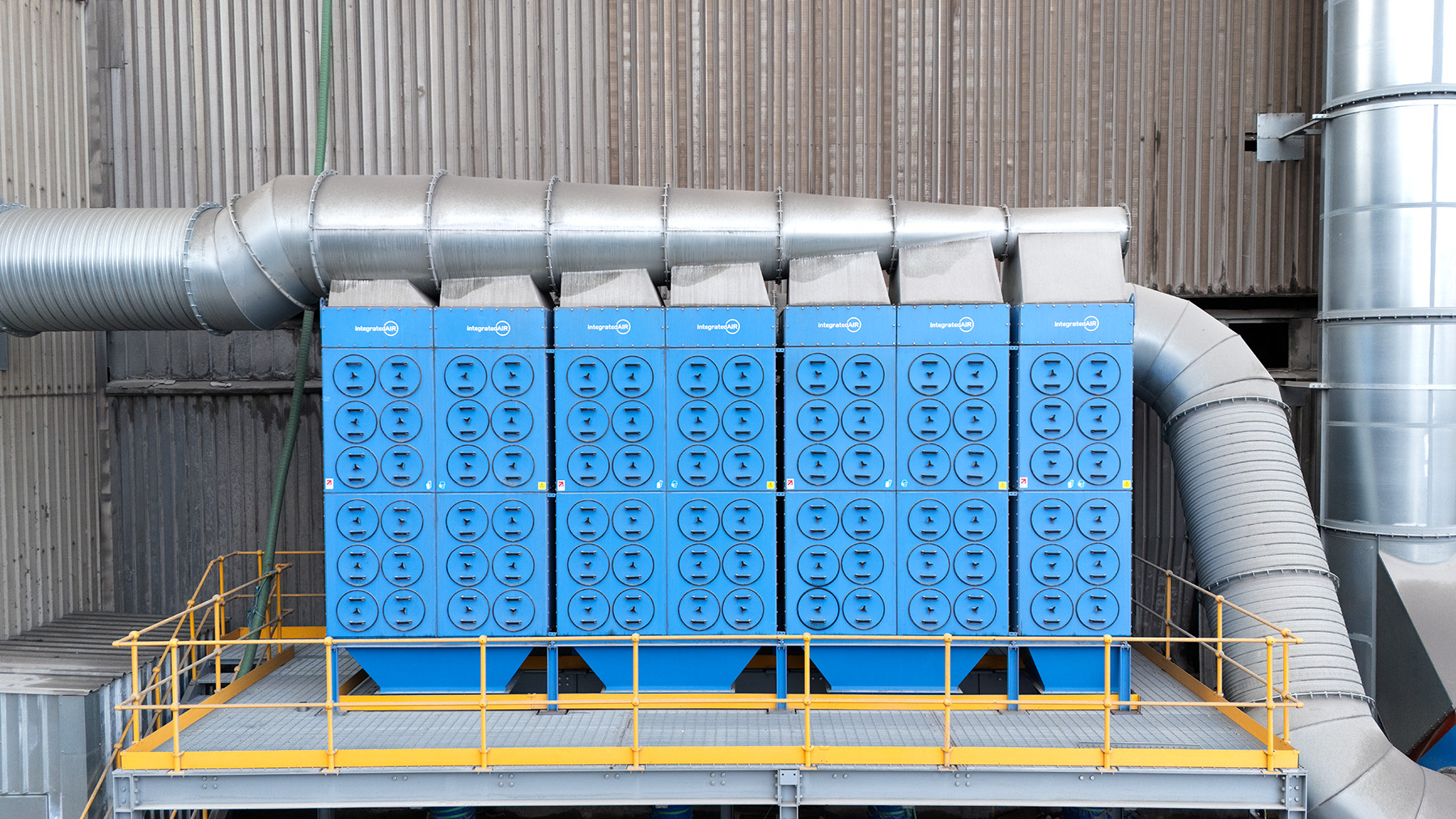
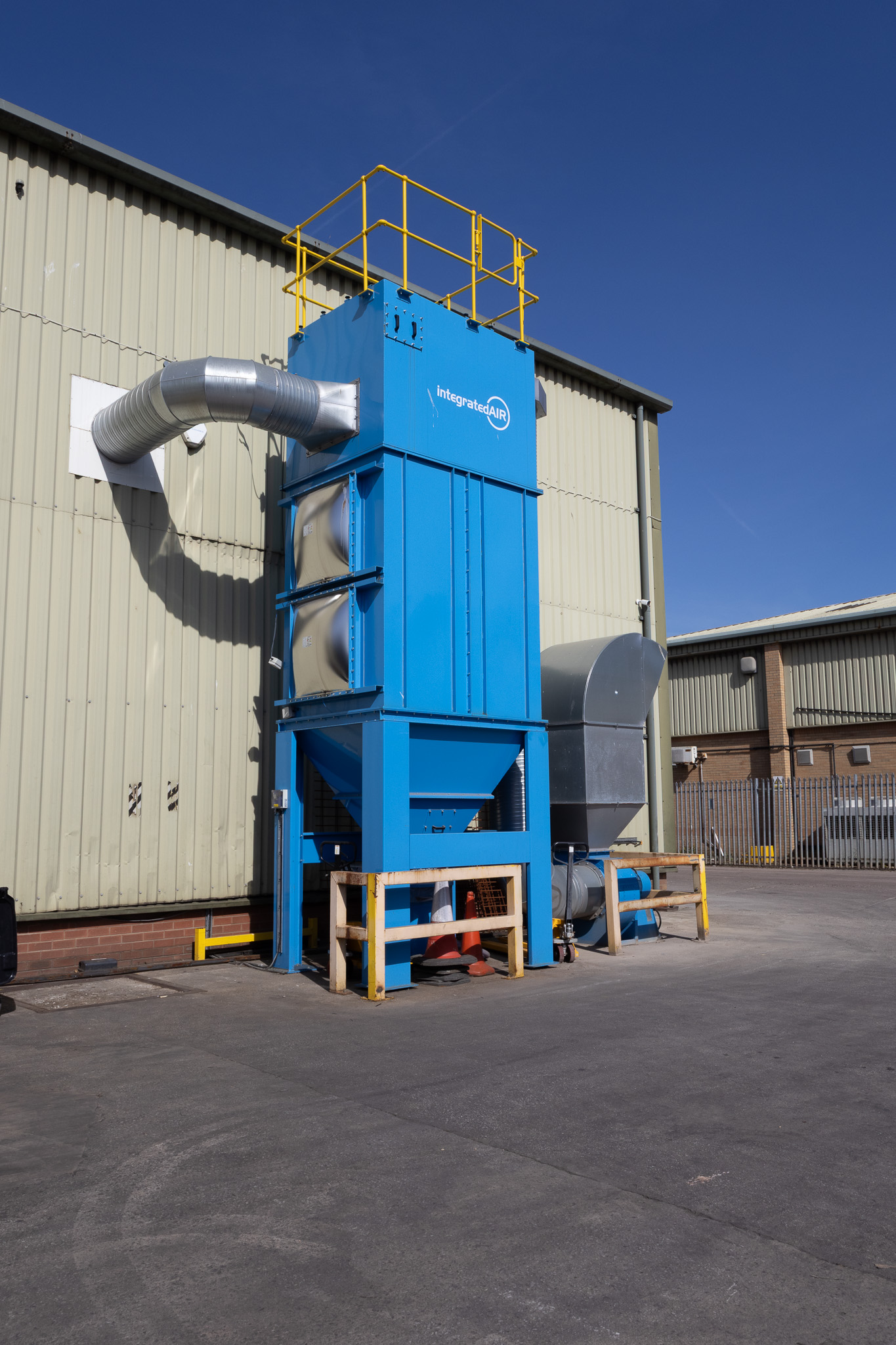
Our BlueClean HC PRO filter unit handles the heavy
particulate loads generated by the tundish wrecking process. This advanced
filtration unit captures fine refractory dust and other airborne contaminants,
ensuring that only clean air is exhausted back into the environment. The unit
has been engineered with an increased discharge height, allowing waste to be
collected directly into site-approved bins that can be transported via
forklift.
Downstream of the filter, a floor-mounted centrifugal fan
provides the necessary airflow to maintain system performance. Capable of
sustaining a high extraction rate, the fan ensures constant negative pressure
throughout the ductwork and hoods, drawing contaminated air effectively from
the source to the filter. The exhaust duct extends vertically along the
exterior factory wall. It rises over 35 metres to discharge clean air above the
roofline, eliminating the risk of recirculating filtered air back into the
facility and maintaining a healthy internal atmosphere.
To facilitate safe and straightforward access for routine
servicing, a steel mezzanine platform was designed with staircases and walkways
to surround the filter unit. The platform allows operatives to reach the
front-facing cartridge filters and rear-mounted solenoids without the need for
MEWPs. This mezzanine conforms with existing infrastructure, reduces service
time and makes maintenance safer.
integratedAIR’s site-specific engineering expertise for industrial operations contributed
significantly to the project's success. Contact us to discuss
how our solutions can meet the air filtration needs of your production
environment.